How to Use Volatility to Set More Realistic FX Trade Targets
Profit targets are often selected backward. A trader chooses a desirable reward-to-risk ratio, multiplies the stop distance by two or three, and places the target wherever the arithmetic lands. The calculation looks tidy, but the currency pair has no obligation to travel that far during the available session.
A realistic fx trade target begins with the movement the market has recently demonstrated. Volatility provides a range of plausible outcomes, not a prediction. It helps answer whether a 70-pip objective belongs within normal daily movement, requires an exceptional catalyst, or sits beyond what the pair usually delivers.
Start With the Pair’s Current Range
Average True Range is a common reference because it measures recent movement across a selected number of candles. If EUR/USD has a 14-day ATR of 65 pips, expecting another 65 pips after the pair has already moved 50 during the current session is ambitious. The target may still be reached, but the trade now depends on an unusually large day.
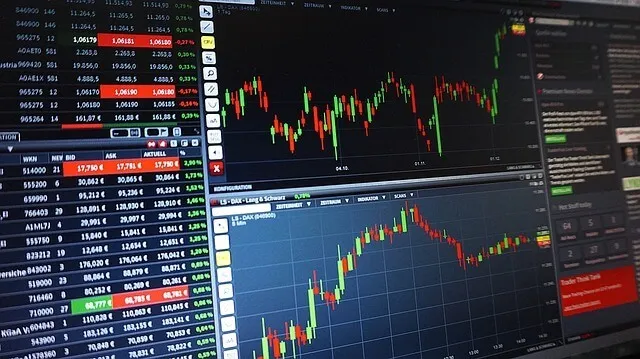
Image Source: Pixabay
Intraday traders can make the same comparison using shorter timeframes or average session ranges. GBP/USD may routinely travel 45 pips during the London morning but only 20 during a quiet late-US session. A target that makes sense at 9:00 a.m. London time can become unrealistic several hours later.
Time matters because volatility is not distributed evenly.
Experienced traders also consider how much of the range has already been used before entry. Beginners often see a strong candle and project the same distance forward. By then, much of the session’s available movement may have occurred, while the entry is farther from support and closer to the point where early participants take profits.
Place Targets Where Orders Are Likely to Gather
Volatility should not replace market structure. It should test whether a structural target is plausible. Previous highs and lows, consolidation boundaries, round numbers, and unfilled gaps often attract orders because traders can identify them easily.
Suppose USD/JPY consolidates below 151.00 before a US inflation report. The data come in hotter than expected, Treasury yields rise, and the pair breaks above the range. A trader enters at 151.15 and targets 152.00 because it offers a clean three-to-one reward relative to the stop.
Yet the pair’s recent daily range is 75 pips, and it had already climbed 40 pips before the release. Reaching 152.00 would require roughly 125 pips of total daily movement. That is possible after a major surprise, but it is not an ordinary extension.
Price initially rallies to 151.62, stalls near a previous swing high, then falls back below 151.00 as early buyers take profits. The breakout was real for an hour. The target was built for a much larger volatility event than the one that occurred.
The arithmetic was correct. The assumption was not.
A more grounded objective might have been placed ahead of the prior high, with a smaller portion left open only if yields and momentum continued to expand. This approach accepts that liquidity often sits just before obvious levels, where experienced participants reduce exposure rather than waiting for the last pip.
Higher Volatility Does Not Guarantee Bigger Profits
Counterintuitively, a rise in volatility can justify a closer target rather than a farther one. Wider spreads, faster reversals, and larger candles increase the distance price can travel, but they also make that movement less orderly. A market capable of moving 100 pips can retrace 50 before continuing.
This is particularly relevant after economic releases. The first move may sweep stops above resistance, reverse through the starting level, and then establish its lasting direction. A distant target based only on the expanded range ignores the path price must survive to reach it.
Position size also changes the decision. When volatility doubles, maintaining the same monetary risk usually requires a smaller position and a wider stop. The trader may then choose a nearer structural target that still offers an acceptable payoff. Bigger candles do not automatically create a better opportunity.
For each fx trade, note the pair’s daily ATR, the average range for the active session, and how far price has already moved. Mark the nearest structural obstacle, then compare its distance with the remaining realistic range. If the target requires an exceptional day, identify the specific catalyst that could produce it and consider taking partial profit earlier. If no such catalyst exists, bring the objective inside the market’s demonstrated capacity rather than asking ordinary volatility to deliver an extraordinary result.