How to Backtest Simple Trading Strategies with TradingView Charts
It makes sense to test an idea prior to staking real money in any trade. Backtesting enables traders to evaluate a strategy vis-a-vis historical data. It aids in providing a simple yet potent answer to the following query: would it have worked in past years? Through the assessment of entry and exit signals at varying market scenes, traders have a good profit-making experience as they are equipped with knowledge of the weaknesses and strengths of their schemes. Backtesting can be used by beginners to fine-tune their decision-making process.
Basic strategies usually integrate such simple elements as the moving average crossover, RSI thresholds, or the breakout. They are frequently applied as they require simple explanations and can be adopted fast. Even the simplest strategy benefits from testing. Using the rules on a historical price chart, a trader is able to gauge how many trades it would have made, what percentage was a winner compared to a loser, and whether it is profitable overall. The procedure is transparent, and it eliminates emotional bias in the decision-making procedure.
The effectiveness of this practice depends heavily on the tools used. With the help of TradingView charts, the backtest process will be accessible to both junior and experienced traders. It has an in-built strategy tester where a trade can be simulated using custom or predefined scripts. In a few clicks, traders can see how their strategy would have performed given months or years. The interface is intuitive and responsive, allowing users to remain focused when looking at the data and not become bogged down by technicality.
Whereas there are traders who create their own custom scripts in Pine Script, there are those who use shared strategies in the public library. These ready-made systems can be applied directly onto a chart and adjusted to individual preferences in risk. The possibility to adjust parameters, e.g. stop loss, take profit, or indicator settings, gives users the opportunity to experiment and learn. Strategy always gives feedback regardless of whether it succeeds or not and can be transferred to increase future arrangements.
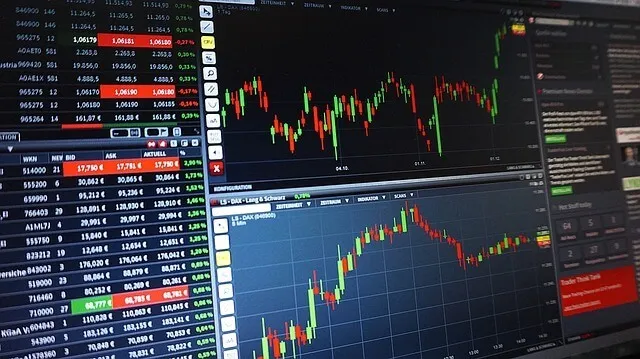
Image Source: Pixabay
Patience is also learnt through backtesting. Not all plans end up working immediately and even successful ones can face consecutive losses. Eventually, by analyzing the performance in various market conditions, traders become wiser on what times or what market situations their strategy can best work. Whereas some of the strategies succeed in trending markets, others are more applicable in range-bound markets. Such knowledge enables traders to know the proper approach during the appropriate time rather than the one size fits all approach.
Another significant lesson that was learnt in backtesting is risk control. Position sizing or use of stop loss can really be bad at making a strategy deliver without the size of a drawdown becoming huge. Tracking the equity curve by evaluating its movement with respect to time aids the trader in determining instances when risks are being taken beyond the necessary limit and correcting such actions. This supports long-term sustainability as much as profitability.
Manual backtesting through the bar replay feature is also available in TradingView charts. Traders can simulate a live trading environment moving through the historic price data one candle at a time. This will aid in honing the ability of making real-time decisions whilst putting the same strategy to test in a controlled manner. The hybrid of the automated and manual testing is a balanced way of skills development.
Backtesting is a powerful and practical method to learn trading; any trader who is interested in making trading better should resort to backtesting. It changes it to an appraisal process, an objective one instead of guessing, a subjective one. Trading with TradingView charts assists traders in ideating, experimenting with a certain degree of safety, and leaving with a better understanding of what actually works.

Comments